Pool Equipment & Systems: Your Complete Guide to Modern Pool Technology in 2025
When I first started working with pool owners, I noticed a common pattern: most people only think about their pool equipment when something breaks. That’s like waiting for your car’s engine to fail before checking the oil. Your pool’s equipment and systems are the heart and lungs of your backyard oasis, working tirelessly to keep your water clean, warm, and safe. Understanding these systems isn’t just about preventing costly repairs—it’s about maximizing efficiency, reducing energy bills, and ensuring your pool operates at peak performance year-round.
Key Takeaways
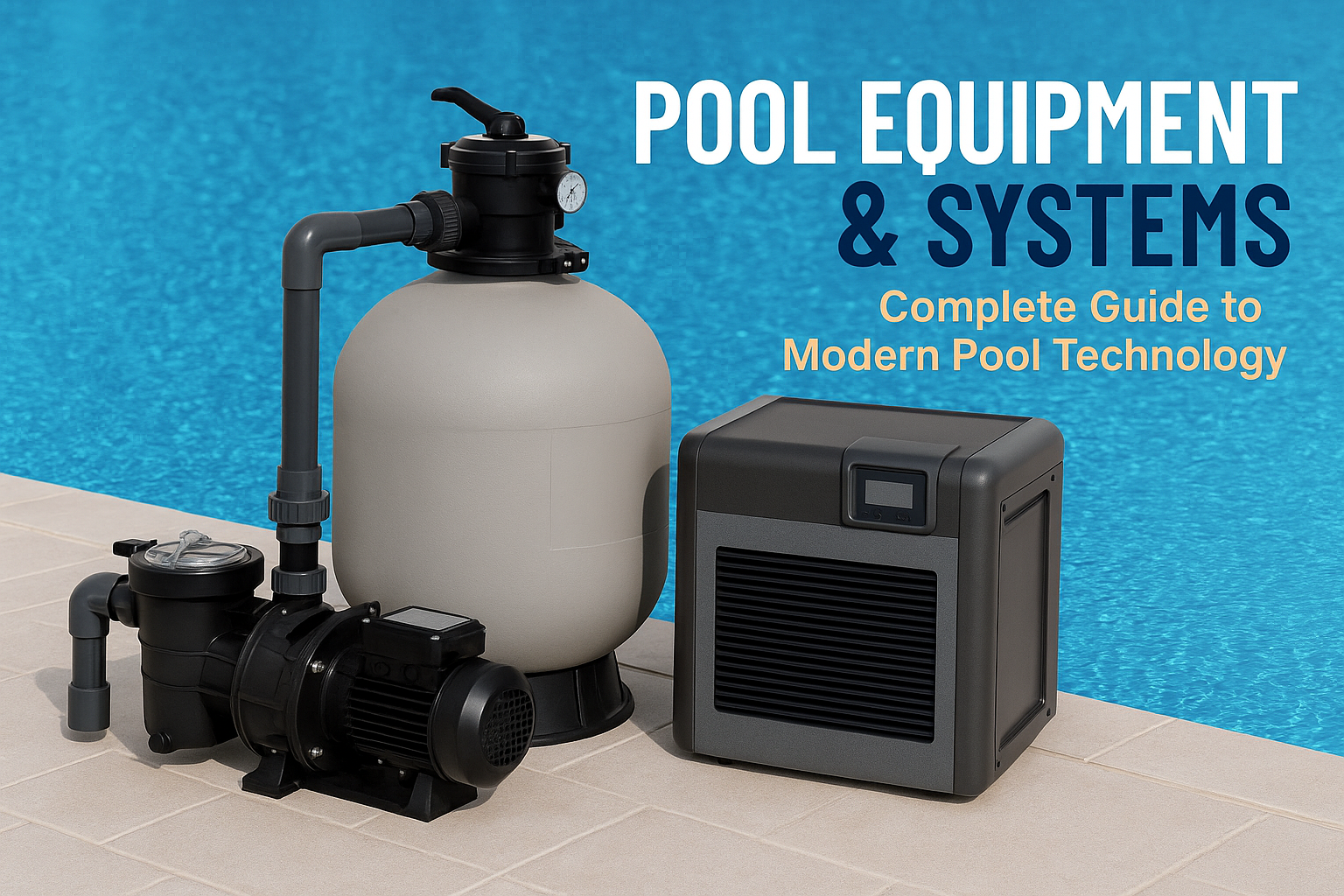
- Pool equipment systems include pumps, filters, heaters, automation controls, and plumbing—all working together to maintain water quality and circulation
- Variable-speed pumps can reduce energy costs by up to 90% compared to traditional single-speed models, making them a smart investment for 2025
- Regular maintenance of pool equipment prevents costly breakdowns and extends the lifespan of your investment
- Automation systems offer convenient control over all pool functions, allowing remote monitoring and scheduling from your smartphone
- Choosing the right equipment depends on pool size, usage patterns, climate, and budget—professional guidance ensures optimal selection
Understanding Pool Equipment & Systems: The Foundation of Pool Care
Pool equipment and systems form an interconnected network that keeps your swimming pool functioning properly. Think of it as the circulatory system of your pool—each component plays a vital role in maintaining water quality, temperature, and cleanliness.
In my experience working with pool service professionals, I’ve seen how proper equipment selection and maintenance can mean the difference between a pool that’s a joy to own and one that becomes a constant source of frustration.
The Core Components of Pool Equipment & Systems
Every pool relies on several essential systems working in harmony:
🔄 Circulation System
- Pool pump (the heart of your system)
- Skimmers and main drains
- Return jets and fittings
- Plumbing lines and valves
🧹 Filtration System
- Sand filters
- Cartridge filters
- Diatomaceous earth (DE) filters
- Filter media and components
🌡️ Heating System
- Gas heaters
- Electric heat pumps
- Solar heating systems
- Heat exchangers
⚙️ Control & Automation
- Manual control panels
- Smart automation systems
- Timers and sensors
- Remote monitoring devices
Pool Pump Repair & Replacement Guide
The pool pump is arguably the most critical piece of equipment in your pool system. It circulates water through the filter, heater, and back to the pool, ensuring proper sanitation and chemical distribution.
Common Pool Pump Problems
I’ve diagnosed hundreds of pump issues over the years. Here are the most frequent problems:
| Problem | Symptoms | Typical Cause | Solution |
|---|---|---|---|
| No Power | Pump won’t turn on | Tripped breaker, bad capacitor | Check electrical, replace capacitor |
| Loud Noises | Grinding, squealing sounds | Worn bearings, debris | Bearing replacement, clean impeller |
| Low Pressure | Weak water flow | Clogged impeller, air leak | Clean impeller, seal air leaks |
| Overheating | Pump shuts off frequently | Poor ventilation, motor issue | Improve airflow, motor service |
| Leaking | Water around pump | Worn seal, cracked housing | Replace seal or pump |
When to Repair vs. Replace Your Pool Pump
This is one of the most common questions I receive. Here’s my professional guidance:
Repair if:
- The pump is less than 5 years old
- Only minor components need replacement (seal, capacitor, impeller)
- Repair costs less than 50% of replacement
- The pump meets your current needs
Replace if:
- The pump is over 8-10 years old
- You have a single-speed pump (upgrade to variable-speed)
- Motor or housing is damaged
- Frequent repairs are needed
- Energy bills are consistently high
For expert assistance with pump issues, consider reaching out to professional pool repair services who can provide accurate diagnostics.
Choosing the Best Replacement Pool Pump
When selecting a new pump, consider these factors:
- Pool Size: Match pump capacity to your pool volume
- Energy Efficiency: Variable-speed pumps offer significant savings
- Horsepower: More isn’t always better—right-sizing matters
- Brand Reliability: Stick with proven manufacturers
- Warranty Coverage: Look for comprehensive protection
Choosing the Right Pool Filter Type
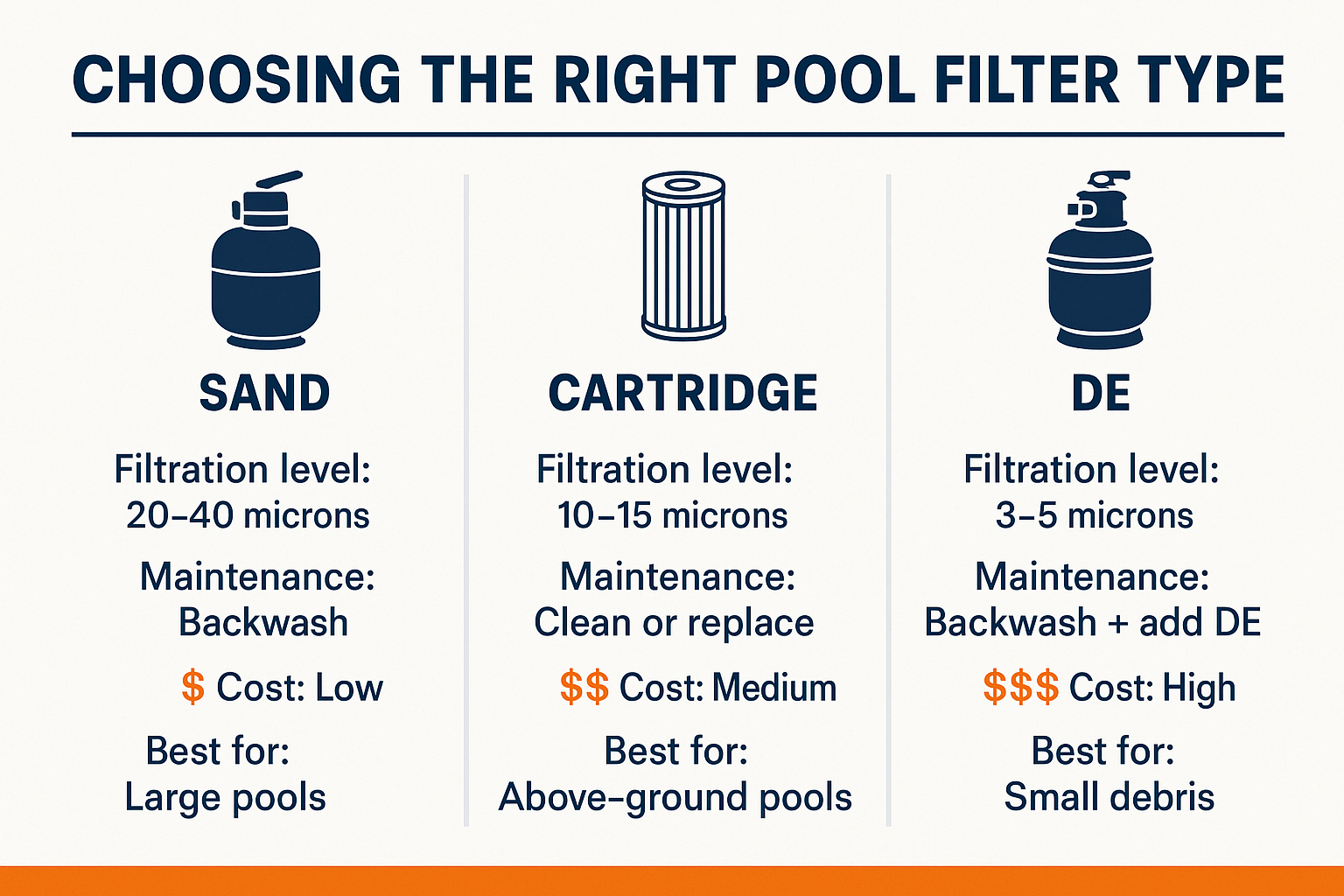
Your filter is your pool’s kidneys, removing debris and contaminants to keep water crystal clear. The three main types each have distinct advantages and trade-offs.
Sand Filters: The Traditional Choice
Pros:
- ✅ Lowest upfront cost
- ✅ Minimal maintenance required
- ✅ Long-lasting filter media (5-7 years)
- ✅ Easy to operate
Cons:
- ❌ Least effective filtration (20-40 microns)
- ❌ Requires backwashing (wastes water)
- ❌ Larger footprint
- ❌ Sand replacement is messy
Best for: Budget-conscious pool owners, larger pools, residential applications
Cartridge Filters: The Low-Maintenance Option
Pros:
- ✅ Better filtration (10-20 microns)
- ✅ No backwashing needed (conserves water)
- ✅ Compact design
- ✅ Easy cartridge cleaning
Cons:
- ❌ Higher initial cost
- ❌ Cartridges need replacement every 2-3 years
- ❌ More frequent cleaning required
- ❌ Can be damaged by high pressure
Best for: Water conservation areas, smaller pools, eco-conscious owners
DE Filters: The Premium Performer
Pros:
- ✅ Superior filtration (3-5 microns)
- ✅ Clearest water quality
- ✅ Efficient debris removal
- ✅ Less frequent cleaning
Cons:
- ❌ Highest cost
- ❌ Complex maintenance
- ❌ DE powder disposal concerns
- ❌ Requires careful handling
Best for: Show pools, commercial applications, perfectionists
“The best filter isn’t the most expensive one—it’s the one that matches your pool’s needs, your maintenance preferences, and your budget. I always tell clients to think long-term when making this decision.” — Pool Equipment Specialist
Pool Heater Installation & Troubleshooting
Extending your swimming season requires reliable heating. In 2025, pool owners have more efficient options than ever before.
Types of Pool Heaters Compared
Gas Heaters
- Rapid heating capability
- Works in any climate
- Higher operating costs
- Best for: Occasional use, spa heating, quick heat-up needs
Electric Heat Pumps
- 80% more efficient than gas
- Lower operating costs
- Slower heating speed
- Best for: Regular use, moderate climates, energy-conscious owners
Solar Heaters
- Free operation after installation
- Environmentally friendly
- Weather-dependent
- Best for: Sunny climates, long-term investment, eco-friendly goals
Common Heater Problems and Solutions
🔧 Heater Won’t Ignite
- Check gas supply and pressure
- Inspect pilot light and igniter
- Verify proper water flow
- Clean burner assembly
🔧 Insufficient Heating
- Verify thermostat settings
- Check for proper gas pressure
- Inspect heat exchanger for scale
- Ensure adequate water flow
🔧 Heater Cycles On/Off
- Clean or replace filter
- Check for flow restrictions
- Inspect pressure switch
- Verify electrical connections
For complex heater issues, I always recommend consulting with experienced pool technicians who have the specialized knowledge and tools needed for safe repairs.
How Pool Automation Systems Work
Pool automation has revolutionized how we manage our pools. In 2025, smart technology puts complete control at your fingertips.
Components of Modern Pool Automation
Control Panel
The brain of your system, managing all equipment functions from a central interface.
Sensors and Monitors
- Water temperature sensors
- Chemical level monitors
- Flow sensors
- Pressure gauges
Actuators and Valves
Automated valves that control water flow to various pool features and equipment.
Communication Module
WiFi or cellular connectivity enabling remote access via smartphone apps.
Benefits of Pool Automation Systems
- Energy Savings: Optimize equipment runtime based on actual needs
- Convenience: Control everything from anywhere
- Consistent Water Quality: Automated chemical dosing and monitoring
- Extended Equipment Life: Prevent over-running and optimize performance
- Enhanced Features: Easy control of lights, waterfalls, and spa functions
Popular Automation Features
- 📱 Smartphone app control
- ⏰ Programmable schedules
- 🌡️ Temperature management
- 💡 LED lighting control
- 🔊 Voice assistant integration
- 📊 Usage tracking and reports
- ⚠️ Alert notifications
Variable-Speed Pool Pumps Explained
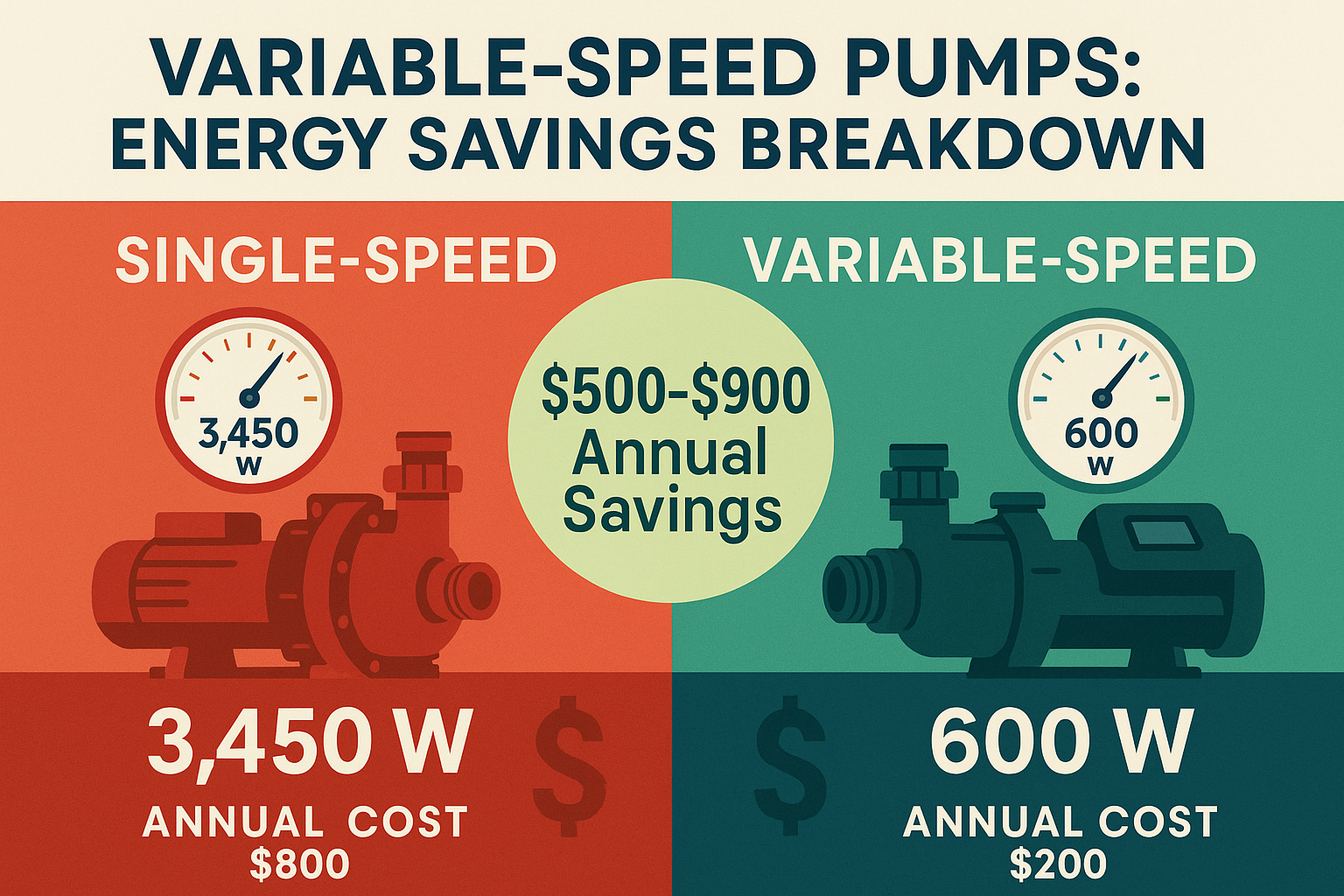
If you’re still running a single-speed pump, you’re likely wasting hundreds of dollars annually on energy costs. Variable-speed pumps represent one of the most significant advances in pool equipment efficiency.
How Variable-Speed Pumps Work
Unlike single-speed pumps that run at full power constantly, variable-speed pumps use permanent magnet motors (similar to electric vehicles) that can adjust speed based on demand. They operate at lower speeds for routine circulation and ramp up only when needed for specific tasks.
Energy Efficiency Benefits
The numbers speak for themselves:
Traditional Single-Speed Pump:
- Operates at 3,450 RPM constantly
- Consumes 2,000-2,500 watts
- Annual cost: $800-$1,200
- Noisy operation
- Shorter lifespan
Variable-Speed Pump:
- Operates at 600-3,450 RPM (adjustable)
- Consumes 200-500 watts (typical operation)
- Annual cost: $150-$300
- Whisper-quiet operation
- Longer lifespan (10+ years)
💰 Potential Savings: $500-$900 per year
When to Upgrade to Variable-Speed
I recommend upgrading if:
- Your current pump is over 6 years old
- You want to reduce energy bills significantly
- You’re renovating or upgrading other equipment
- Local regulations require energy-efficient equipment
- You’re converting to a salt water pool system
Many utility companies offer rebates for variable-speed pump installations, making the upgrade even more affordable. The payback period is typically 2-3 years through energy savings alone.
Pool Plumbing System Overview
Your pool’s plumbing is the hidden infrastructure that makes everything work. Understanding this system helps you identify problems early and communicate effectively with repair professionals.
Suction Side Components
Skimmers
- Surface water collection
- Debris basket filtration
- Weir door operation
- Connection to pump suction
Main Drain
- Bottom water circulation
- Safety vacuum release
- Dual-drain requirements
- Anti-vortex covers
Return Side Components
Return Jets
- Filtered water distribution
- Adjustable directional flow
- Eyeball fittings
- Wall penetration seals
Pressure-Side Cleaners
- Dedicated return lines
- Booster pump connections
- Debris bag systems
- Hose management
Common Plumbing Issues
🔴 Leaks
- Underground pipe breaks
- Fitting failures
- Cracked PVC
- Worn O-rings and gaskets
🔴 Blockages
- Clogged lines
- Valve malfunctions
- Debris accumulation
- Collapsed pipes
🔴 Air in System
- Loose connections
- Pump seal leaks
- Damaged suction lines
- Improper valve settings
Valves and Their Functions
Understanding your pool valves is essential for proper operation:
- Ball Valves: On/off control for various lines
- Check Valves: Prevent backflow
- Three-Way Valves: Direct flow between options
- Jandy Valves: Automated flow control
- Pressure Relief Valves: Safety protection
Top Pool Equipment Brands Compared
Choosing quality equipment from reputable manufacturers ensures reliability and long-term performance. Here’s my professional assessment of the leading brands in 2025.
Hayward: The Innovation Leader
Strengths:
- Cutting-edge automation technology
- Wide product range
- Strong warranty support
- Excellent variable-speed pumps
Best Products:
- TriStar VS variable-speed pumps
- SwimClear cartridge filters
- Universal H-Series heaters
- OmniLogic automation
Price Point: Mid to premium range
Pentair: The Reliability Champion
Strengths:
- Exceptional build quality
- Industry-leading warranties
- Professional-grade products
- Superior customer service
Best Products:
- IntelliFlo variable-speed pumps
- Clean & Clear cartridge filters
- MasterTemp heaters
- IntelliCenter automation
Price Point: Premium range
Jandy: The Professional’s Choice
Strengths:
- Commercial-grade durability
- Advanced automation features
- Comprehensive system integration
- Strong dealer network
Best Products:
- FloPro variable-speed pumps
- Pro Series filters
- JXi heaters
- AquaLink automation
Price Point: Premium range
Polaris: The Cleaning Specialist
Strengths:
- Market-leading pool cleaners
- Innovative robotic technology
- Reliable pressure-side cleaners
- Excellent suction cleaners
Best Products:
- Polaris 9650iQ robotic cleaner
- Polaris 3900 Sport pressure cleaner
- Polaris 280 pressure cleaner
Price Point: Mid to premium range
Value Brands Worth Considering
For budget-conscious pool owners, these brands offer solid performance:
- Sta-Rite: Reliable pumps and filters at competitive prices
- Blue Wave: Affordable entry-level equipment
- Game: Budget-friendly accessories and components
Maintaining Your Pool Equipment & Systems
Proper maintenance extends equipment life, prevents breakdowns, and ensures efficient operation. Here’s my recommended maintenance schedule based on years of experience.
Daily Tasks
- ✓ Check pump operation and sounds
- ✓ Inspect skimmer baskets
- ✓ Verify proper water level
- ✓ Monitor pressure gauge readings
Weekly Tasks
- ✓ Clean skimmer and pump baskets
- ✓ Test water chemistry
- ✓ Inspect for leaks or unusual conditions
- ✓ Backwash or clean filter as needed
Monthly Tasks
- ✓ Deep clean filter cartridges or grids
- ✓ Inspect all visible plumbing
- ✓ Test automation system functions
- ✓ Clean salt cell (if applicable)
- ✓ Lubricate O-rings and gaskets
Seasonal Tasks
Spring Opening:
- Comprehensive equipment inspection
- Replace worn components
- Test all systems thoroughly
- Update automation schedules
Fall Closing:
- Winterize equipment properly
- Drain heaters and pumps
- Store removable components
- Protect against freezing
Professional Service Recommendations
While DIY maintenance handles routine tasks, professional service ensures comprehensive care. I recommend scheduling professional inspections:
- Annually: Complete system evaluation
- Bi-annually: Equipment tune-ups
- As needed: Repairs and troubleshooting
For expert maintenance services, check out the comprehensive pool service offerings available in your area.
Upgrading Your Pool Equipment in 2025
Technology advances rapidly, and pool equipment is no exception. Here are the most worthwhile upgrades for 2025.
Smart Automation Integration
Modern automation systems offer unprecedented control and efficiency. Integration with home automation platforms like Amazon Alexa, Google Home, and Apple HomeKit makes pool management effortless.
ROI Timeline: 3-5 years through energy savings and convenience
LED Lighting Conversion
LED pool lights consume 75% less energy than traditional incandescent bulbs while offering millions of color options and longer lifespan.
ROI Timeline: 2-3 years through energy savings
Salt Water Chlorination
Converting to a salt water system reduces chemical costs, provides gentler water, and automates chlorine production. Learn more about salt water swimming pools and their benefits.
ROI Timeline: 3-4 years through chemical savings
Variable-Speed Pump Upgrade
As mentioned earlier, this upgrade delivers the fastest payback through dramatic energy savings.
ROI Timeline: 2-3 years through energy savings
High-Efficiency Heater
Modern heat pumps and condensing gas heaters offer significantly better efficiency than older models.
ROI Timeline: 5-7 years through energy savings
Troubleshooting Common Equipment Problems
Over the years, I’ve developed a systematic approach to diagnosing pool equipment issues. Here’s my troubleshooting framework.
The “No Flow” Problem
Symptoms: Weak or no water circulation
Diagnostic Steps:
- Check pump basket for debris
- Verify all valves are properly positioned
- Inspect filter pressure (backwash if high)
- Look for air leaks in suction lines
- Examine pump impeller for clogs
The “High Pressure” Problem
Symptoms: Filter pressure gauge reads abnormally high
Diagnostic Steps:
- Clean or backwash filter
- Check for closed or partially closed valves
- Inspect return lines for blockages
- Verify proper pump operation
- Examine filter media condition
The “Air Bubbles” Problem
Symptoms: Bubbles returning to pool through jets
Diagnostic Steps:
- Check water level in pool
- Inspect pump lid O-ring
- Examine all suction-side connections
- Look for cracks in pump housing
- Verify drain plug is tight
The “Equipment Won’t Turn On” Problem
Symptoms: Pump, heater, or other equipment won’t start
Diagnostic Steps:
- Check circuit breaker
- Test GFCI outlet (reset if needed)
- Inspect timer settings
- Examine capacitor (pump issues)
- Verify automation system commands
For persistent problems that resist DIY solutions, don’t hesitate to contact professional pool technicians who can provide expert diagnostics and repairs.
Energy Efficiency and Cost Savings
In 2025, energy efficiency isn’t just environmentally responsible—it’s financially smart. Pool equipment represents a significant portion of home energy consumption.
Energy Consumption Breakdown
Typical Pool Energy Usage:
- Pump: 60-70% of total energy
- Heater: 20-30% of total energy
- Lighting: 5-10% of total energy
- Automation/Other: 5% of total energy
Strategies for Maximum Efficiency
🌟 Optimize Pump Runtime
- Run pump during off-peak hours
- Reduce daily runtime to minimum effective duration
- Use variable-speed settings appropriately
🌟 Maintain Equipment Properly
- Clean filters regularly
- Keep impellers debris-free
- Ensure proper water chemistry
🌟 Use Pool Covers
- Reduce heating costs by 50-70%
- Minimize water evaporation
- Keep debris out of pool
🌟 Upgrade to Efficient Equipment
- Variable-speed pumps
- LED lighting
- High-efficiency heaters
- Smart automation
Calculating Your Energy Savings
Here’s a simple formula to estimate savings from a variable-speed pump upgrade:
Annual Savings = (Old Pump Wattage – New Pump Wattage) × Daily Hours × 365 Days × Electricity Rate ÷ 1000
Example:
- Old pump: 2,000 watts
- New pump: 400 watts (average)
- Daily runtime: 8 hours
- Electricity rate: $0.12/kWh
Savings = (2,000 – 400) × 8 × 365 × 0.12 ÷ 1000 = $561.60 per year
Future Trends in Pool Equipment & Systems
The pool industry continues to evolve with exciting technological advances on the horizon.
Emerging Technologies
🚀 AI-Powered Water Management
Artificial intelligence systems that predict chemical needs, optimize equipment runtime, and prevent problems before they occur.
🚀 Advanced Robotic Cleaners
Next-generation robots with improved navigation, better cleaning efficiency, and smartphone integration.
🚀 Solar-Powered Equipment
Pumps and automation systems powered entirely by solar panels, reducing grid dependency.
🚀 Touchless Water Testing
Continuous monitoring systems that automatically adjust chemistry without manual testing.
🚀 Voice-Controlled Everything
Comprehensive voice control integration with all major smart home platforms.
Sustainability Focus
Environmental consciousness drives equipment innovation:
- Water conservation features
- Reduced chemical dependency
- Renewable energy integration
- Recyclable materials
- Extended product lifespans
Working with Pool Equipment Professionals
While DIY maintenance handles routine tasks, professional expertise proves invaluable for installations, repairs, and complex troubleshooting.
When to Call a Professional
Immediate Professional Help Needed:
- ⚠️ Electrical issues or concerns
- ⚠️ Gas heater problems
- ⚠️ Major leaks or plumbing failures
- ⚠️ Equipment installations
- ⚠️ Automation system setup
Professional Service Recommended:
- Annual equipment inspections
- Efficiency audits
- Equipment upgrades
- Warranty repairs
- Complex diagnostics
Questions to Ask Pool Equipment Professionals
Before hiring a technician, ask:
- Are you licensed and insured?
- What brands do you specialize in?
- Do you offer warranties on work performed?
- What’s your typical response time?
- Can you provide references?
- Do you offer maintenance plans?
Understanding Service Costs
Typical Service Call: $75-$150
Hourly Labor Rate: $85-$125
Common Repairs:
- Pump seal replacement: $150-$250
- Heater repair: $200-$500
- Filter cleaning: $100-$200
- Automation troubleshooting: $150-$300
Conclusion: Mastering Your Pool Equipment & Systems
Understanding pool equipment and systems empowers you to make informed decisions, reduce costs, and enjoy a trouble-free swimming experience. The key takeaways I want you to remember are:
Your pool equipment is an investment that requires attention, maintenance, and occasional upgrades. Don’t wait for catastrophic failures—proactive care prevents expensive emergencies.
Energy efficiency matters more than ever. Variable-speed pumps, LED lighting, and smart automation aren’t luxuries—they’re smart financial decisions that pay for themselves through reduced operating costs.
Technology is your friend. Modern pool automation and monitoring systems make pool ownership easier and more enjoyable than ever before. Embrace these tools to simplify your life.
Professional help is valuable. While DIY maintenance handles routine tasks, expert technicians bring specialized knowledge and tools that ensure safe, effective repairs and installations.
Your Next Steps
- Assess your current equipment – Identify outdated or inefficient components
- Create a maintenance schedule – Establish regular care routines
- Budget for upgrades – Prioritize energy-efficient improvements
- Find a trusted professional – Establish a relationship with qualified pool service experts
- Stay informed – Keep learning about new technologies and best practices
Whether you’re maintaining existing equipment or planning major upgrades, the information in this guide provides the foundation for smart decision-making. Your pool equipment and systems work hard to deliver clean, comfortable, enjoyable swimming—give them the attention they deserve.
For personalized guidance on your specific pool equipment needs, professional technicians are ready to help. Visit the contact page to connect with experienced pool professionals who can assess your system and recommend the best solutions for your situation.
Remember: a well-maintained pool with properly functioning equipment isn’t just an asset—it’s a source of enjoyment, relaxation, and family memories for years to come. Invest in understanding and caring for your pool equipment and systems, and you’ll be rewarded with crystal-clear water, efficient operation, and peace of mind.